
The Ultimate Guide to Choosing the Right Waste With Rubber Plug
Selecting the right waste with rubber plug is not a casual purchase—it's a decision that balances sealing reliability, service life, and installation compatibility. Prices range from under $10 to over $50, and the gap reflects real differences in materials, manufacturing processes, and design logic.
This guide breaks down the core decision points based on technical specifications and real-world performance data.
Getting the Size Wrong Means Starting Over
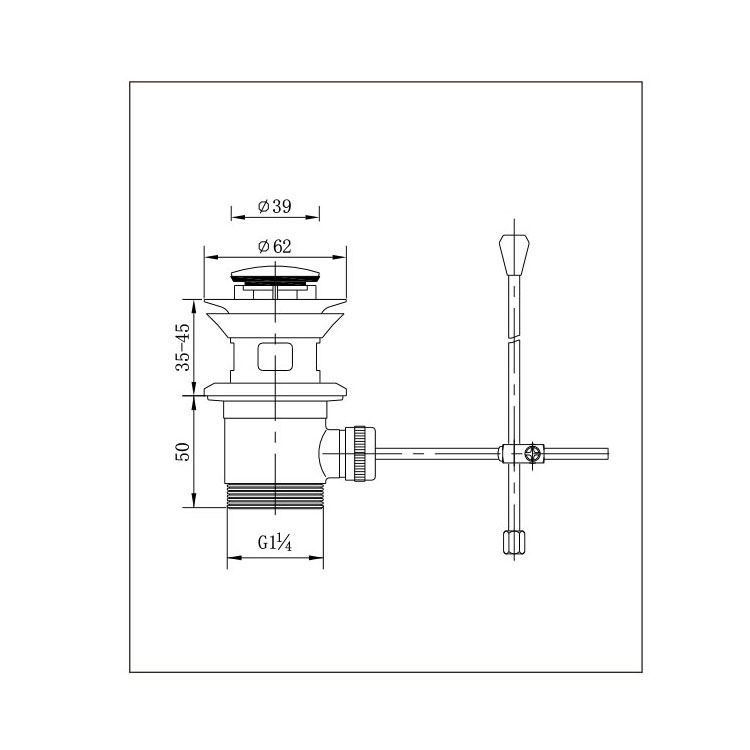
Size mismatch is the number one cause of leaks. The waste with rubber plug comes in only two standard sizes, each tied to a specific application:
| Specification | British Standard | Actual Thread Diameter | Application |
|---|---|---|---|
| 1¼ inch (32mm) | BSP 1.25" | Approx. 36–39mm | Bathroom basin |
| 1½ inch (40mm) | BSP 1.5" | Approx. 43–45mm | Bathtub, kitchen sink |
Industry consensus: In the UK plumbing standard, baths and kitchen sinks universally use the 1.5" BSP specification, while basins use 1.25" BSP. The "inch" measurement refers to the threaded portion of the drain pipe, not the top diameter of the rubber plug.
Action step: Measure your existing drain opening or check the label on your old unit before ordering. An incorrect size means the plug cannot form a proper sealing surface, and even slight water pressure will cause seepage.
Sealing Mechanism: Rubber Plug vs. Metal Plug with O-Ring
This is the most consequential difference in how these products perform. Two fundamentally different sealing approaches dominate the market:
| Mechanism | How It Works | Advantage | Disadvantage |
|---|---|---|---|
| Solid rubber/silicone plug | The material compresses against the drain wall through its own elasticity | Forgiving of diameter tolerances, superior seal reliability | Rubber degrades over time; requires periodic replacement |
| Metal plug + O-ring | A metal cap presses down on a replaceable rubber O-ring | Premium feel, durable exterior, longer overall lifespan | Seal quality depends entirely on the O-ring; failure requires replacement |
Decision rule: Choose a silicone or high-purity rubber plug if sealing is your top priority—the material adapts to minor imperfections in the drain opening. Choose a metal plug with O-ring if you value aesthetic quality and are willing to monitor the O-ring's condition.
Performance data shows that rubber plugs with silicone purity above 85%, edge bevel under 0.3mm, and compression set under 5% show no capillary leakage after 120 use cycles. Recycled compound alternatives typically develop micro-cracks within 30–40 cycles.
Rubber vs. Silicone: Not the Same Thing
These terms are often used interchangeably, but the performance gap is substantial:
| Comparison | Rubber (NBR/Natural) | Silicone |
|---|---|---|
| Temperature range | Approx. -10°C to 80°C | -40°C to 200°C |
| Elastic recovery | Prone to plastic deformation; poor recovery | Compression set > 94%; excellent recovery |
| Chemical resistance | Moderate | Superior against acids and alkalis |
| Cost | Lower | Higher |
| Typical use cases | Standard residential drainage | High-heat drainage, medical devices, laboratory settings |
Industry reference: Major manufacturers such as Hualian use NBR (nitrile butadiene rubber) or EPDM (ethylene propylene diene monomer) as the standard rubber material for brass wastes, rated for temperatures up to 80°C and working pressure up to 10 Bar. These materials fully meet household demand.
Bottom line: For standard bathroom and kitchen use, NBR or EPDM is perfectly adequate. Choose silicone only when discharging high-temperature water or chemical-laden wastewater.
Operation Type: Which One Is Easier to Maintain?
Different operating mechanisms offer varying levels of convenience—but more importantly, they differ dramatically in repairability and replacement-part availability:
| Type | Operation | Maintenance Reality |
|---|---|---|
| Plug & Chain (traditional) | Manual insertion and removal via a chain or cord | Easiest to maintain. Universal fit; replacement parts available at any hardware store |
| Push-click (pop-up) | Press the top to open or close | Convenient, but brand-specific mechanisms—replacements often require ordering from the original manufacturer |
| Flip/spin (swivel) | Rotate the top to control drainage | Same limitation: parts are rarely interchangeable across brands |
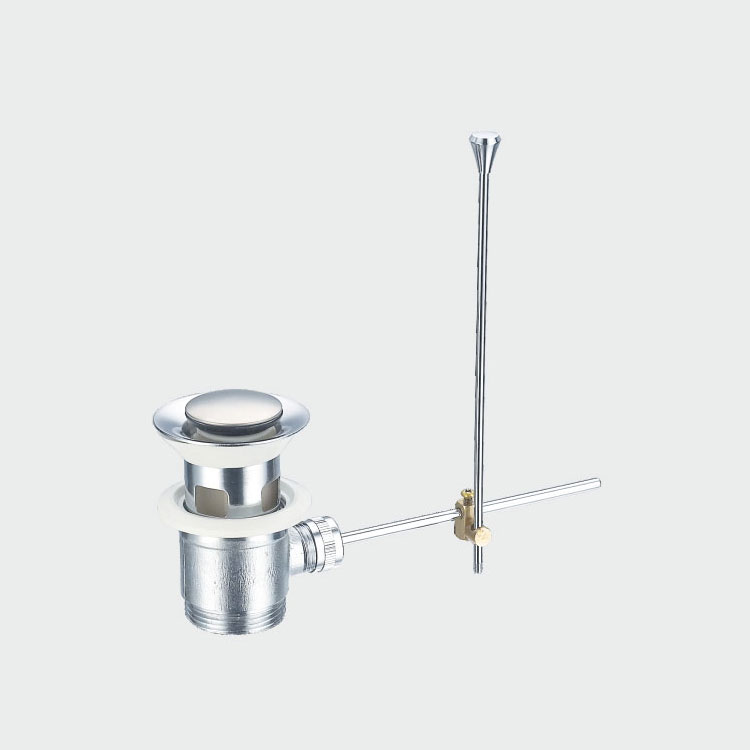
| Lever-operated pop-up | Controlled by a rod on the countertop | Most complex installation; involves internal drain components |
Recommendation: Choose Plug & Chain for long-term maintenance peace of mind. Choose Push-click only if you confirm that replacement cartridges are readily available for that specific model.
FAQ: The 6 Questions Users Ask Most
Q1: Why does my new plug still leak?
Check these in order of likelihood:
-
Size mismatch—confirm the plug matches your drain specification
-
Poor rubber quality—recycled materials harden and crack within 3–4 months
-
Debris or scratches on the drain seating surface
-
Incomplete insertion—the plug is not fully seated
Q2: How often should I replace the rubber plug?
Under normal use, NBR or EPDM plugs typically last 2–3 years, depending on frequency of use and water quality. Replace immediately when you notice hardening, cracking, or loss of elasticity.
Q3: Which is better—rubber plug or metal plug with O-ring?
It depends entirely on your priority:
-
Sealing reliability → Rubber/silicone plug. The material conforms to imperfections and provides a more forgiving seal.
-
Appearance and exterior durability → Metal plug with O-ring. But remember that the O-ring itself remains a consumable part that will need replacement.
Q4: My basin has an overflow hole. What do I need?
You must choose a slotted waste—one with side cutouts that align with the overflow channel. A non-slotted waste will block the overflow path, potentially causing water to accumulate under the countertop.
Q5: Brass vs. plastic body—how do I decide?
| Material | Advantages | Disadvantages |
|---|---|---|
| Brass (chrome-plated) | Corrosion-resistant, premium feel, long service life | Higher cost |
| Plastic (ABS/PP) | Affordable, lightweight | Less durable; becomes brittle over time |
Q6: Can I install this myself?
Plug & Chain types are DIY-friendly—typically requiring only a wrench and plumber's tape. Push-click and lever-operated types involve more complex internal components; professional installation is recommended.
Decision Flow
Step 1 → Measure the drain opening → Confirm size (32mm basin / 40mm sink)
Step 2 → Check for overflow hole → Choose slotted or non-slotted
Step 3 → Pick sealing type: Rubber (better seal) or Metal+O-ring (better finish)
Step 4 → Choose material: NBR/EPDM for daily use, Silicone for special needs
Step 5 → Pick operation: Plug & Chain (easiest to replace) over push-click (check parts availability)
Send Inquiry



X
We use cookies to offer you a better browsing experience, analyze site traffic and personalize content. By using this site, you agree to our use of cookies.
Privacy Policy